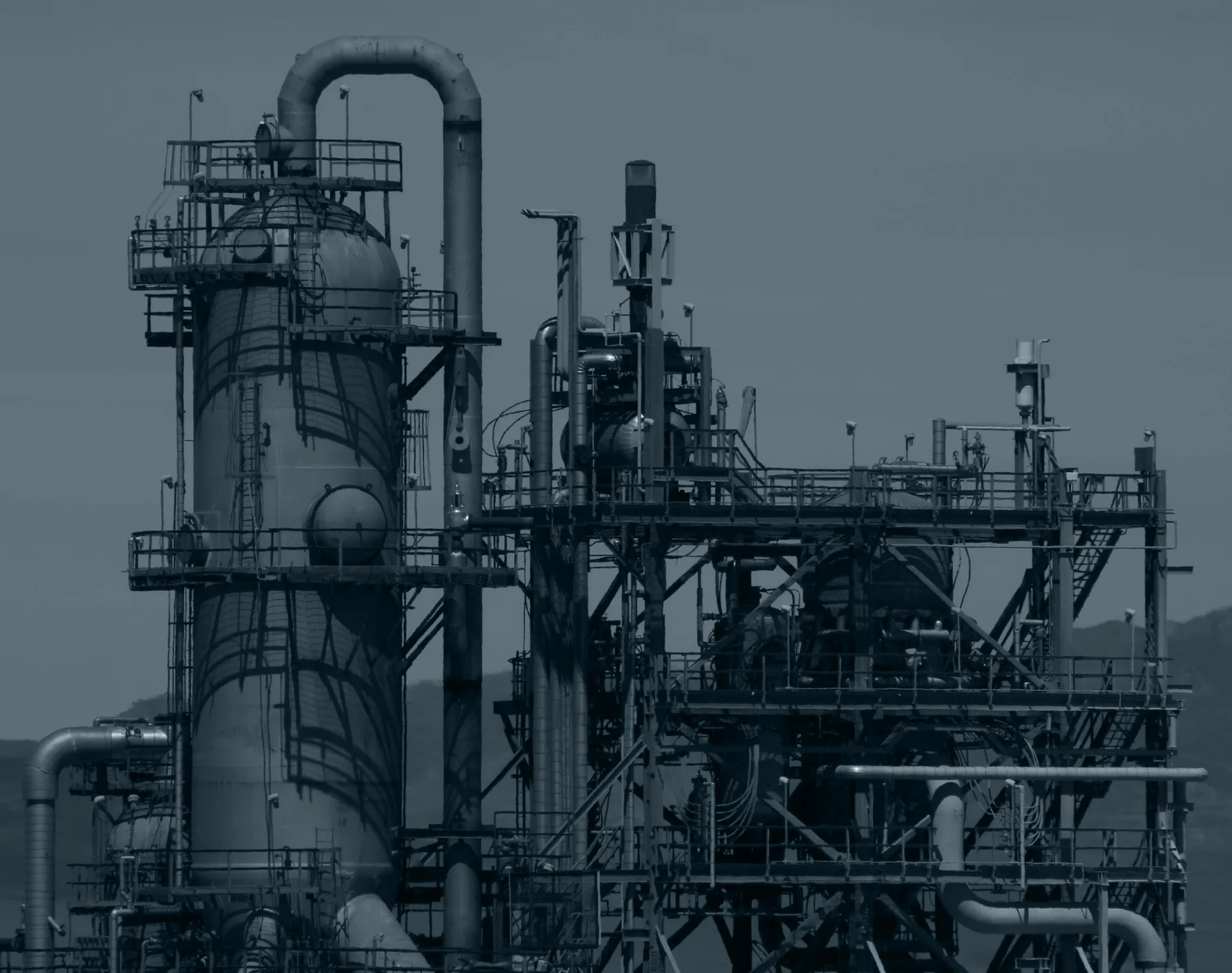
We're building intelligence for the infrastructure that powers the world.
Energy Infrastructure
Energy infrastructure is not background infrastructure.
It is economic infrastructure.
Power generation, electricity networks, oil and gas facilities, LNG, petrochemicals, water and industrial systems support the industries, cities and economies growing around them.
These facilities are expected to operate continuously, safely and efficiently, often while expanding in scale and complexity.
The cost of getting an important operational decision wrong is not measured only in software downtime.
It can affect production, maintenance, equipment, people and the wider operation.
That is the environment Renacore is built for.
More data hasn't solved the decision problem.
Modern energy facilities already generate enormous amounts of information.
Control systems know what the process is doing.
Historians know what changed.
Maintenance systems know what work was performed.
Engineering documents describe how equipment should behave.
Sensors, alarms and monitoring systems continuously report what they see.
And yet, when something unusual happens, engineers still have to determine:
Is this real?
What changed?
Why is it happening?
What evidence supports it?
Does it require attention now?
The information often exists.
The difficult part is bringing it together quickly enough to understand what matters.
This Is What We Mean by Infrastructure Intelligence
Infrastructure intelligence is not another dashboard.
It is not another source of alerts.
And it is not a replacement for the systems already operating the facility.
It is the intelligence layer that sits across them.
Renacore connects operational behaviour, asset context, engineering knowledge, maintenance history and physical constraints around the infrastructure they describe.
The objective is simple:
Turn fragmented evidence into a clearer understanding of what is happening across the facility.
From Signal to Understanding
A sensor can tell you that something changed.
That does not mean the equipment is failing.
A threshold can tell you that a limit was crossed.
That does not explain why.
And an alarm can demand attention without knowing whether the condition represents meaningful operational risk.
Renacore evaluates what changed in context before it becomes a condition that requires engineering attention.
It combines different forms of intelligence to understand a condition from more than one perspective.
Time-series models understand how operating behaviour is changing.
Physics-informed models evaluate whether what the data suggests makes sense against equipment behaviour and physical constraints.
Language models connect those findings with engineering documents, maintenance history and operational context.
No single model is treated as the whole answer.
Filter the Noise. Investigate Real Risk.
Critical infrastructure does not need more things demanding attention.
It needs better ways to determine what deserves it.
Renacore is focused on helping engineers distinguish meaningful conditions from operational noise, assemble the relevant evidence and investigate developing risk with greater context.
That is where we start.
One operating question.
One defined workflow.
One measurable result.
Then we expand from the same infrastructure foundation.
Built Around the Reality of GCC Operations
The GCC presents a particular operating environment.
Large facilities.
Long-lived infrastructure.
Mixed generations of industrial technology.
High requirements for availability.
Strict expectations around security and data control.
Arabic and English working side by side.
And operational environments where replacing core systems simply to adopt a new technology is rarely realistic.
Renacore is being built around those constraints rather than asking operators to remove them.
The platform works with the infrastructure, systems and engineering processes already in place.
Arabic and English are supported across the platform and its language intelligence so teams can work with operational and engineering context in either language.
Keep the Systems That Already Work
We do not believe energy operators need another technology transformation program before they can benefit from intelligence.
Historians should remain historians.
SCADA and DCS systems should continue operating the plant.
Maintenance systems should remain the systems used to plan and execute work.
Renacore sits between the evidence those systems contain and the engineering decisions people have to make.
The existing technology investment remains in place.
Its information becomes more useful together.
Intelligence Without Operational Authority
Understanding infrastructure and controlling infrastructure are different responsibilities.
We keep them separate.
Renacore is read-only toward operational technology.
There is no control command path to PLC, DCS or SCADA equipment.
The platform can identify, evaluate and recommend.
Engineers and operators remain responsible for consequential decisions.
Because in critical infrastructure, intelligence should improve human judgment, not quietly replace it.
Why We Are Building Renacore
We believe the next generation of industrial software will not be defined by how many dashboards it creates or how many alerts it generates.
It will be defined by how well it understands the infrastructure underneath them.
What exists.
How it is connected.
How it normally behaves.
What has changed.
Which evidence agrees.
Which evidence does not.
What deserves investigation.
And what remains uncertain.
That is the foundation we are building.
Built for Energy Infrastructure
Renacore was founded in 2025 and is being built around the operational realities of energy infrastructure.
Our ambition is broader than one model, one asset or one application.
We are building a shared intelligence foundation from which operators can investigate abnormal conditions, assess degradation, evaluate interventions and develop new operational applications without rebuilding the underlying context each time.
Start with the problem that matters today.
Build the foundation for the questions that come next.
Start With One Operating Question
Choose one facility, system or operational challenge and evaluate Renacore against the evidence your engineers already use.